Net Carbs vs Total Carbs – What to Count and Why
Total carbohydrate is everything on the label's carbohydrate line. Net carbs are total carbs minus fiber, and usually minus sugar alcohols too. Low-carb and keto diets count net carbs; most other approaches count total carbs or simply calories.
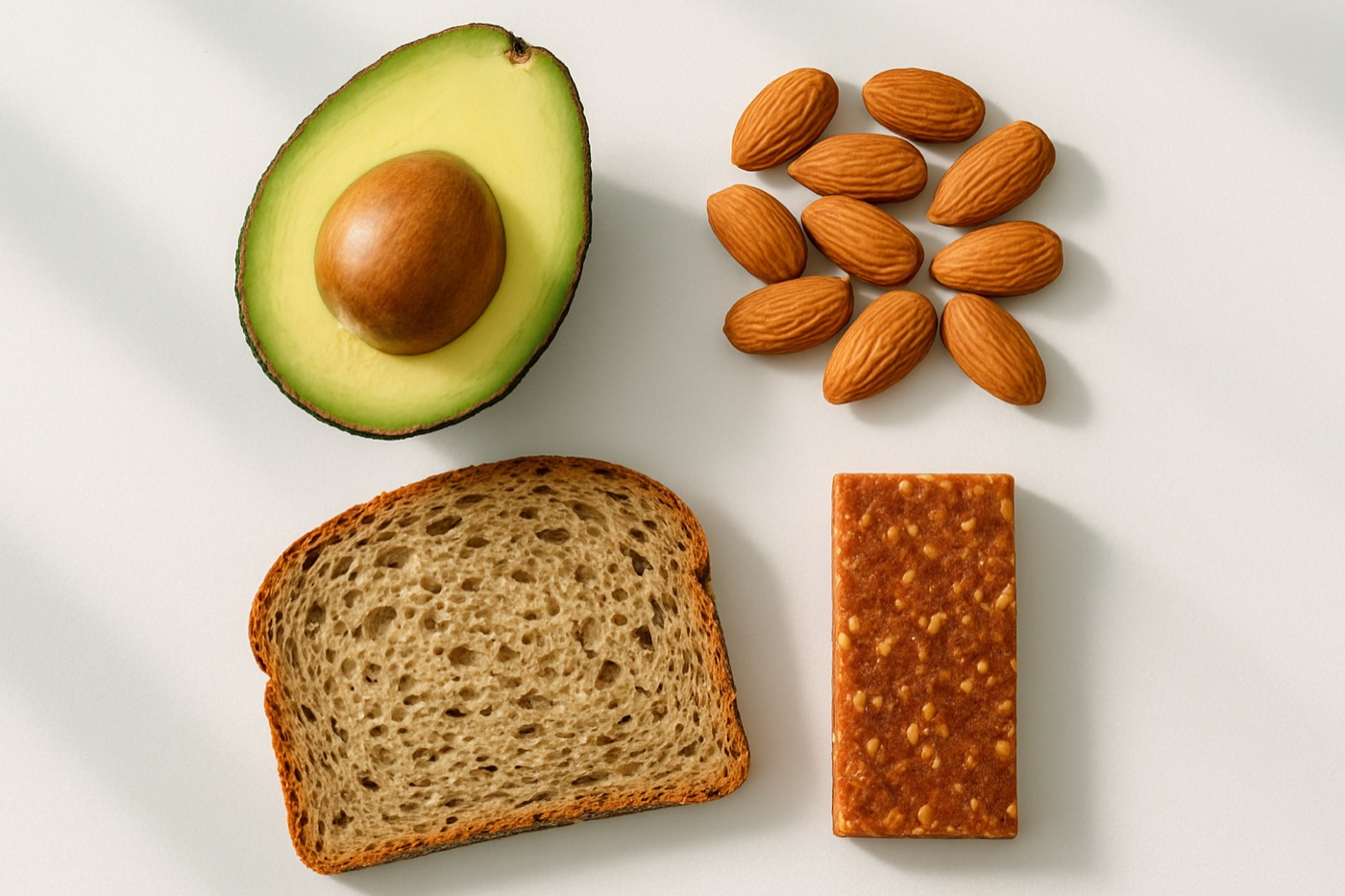
Carbohydrate on a nutrition label is a family of things: starch, sugars, fiber and sometimes sugar alcohols. They do not all behave the same way in the body, which is where the idea of net carbs comes from.
The definitions
Total carbohydrate is the full amount on the label’s “Total Carbohydrate” line. In the US it includes dietary fiber, total sugars (including added sugars) and, where present, sugar alcohols.
Net carbs is an informal figure: total carbohydrate minus the carbohydrate that has little effect on blood sugar. The common formulas are:
- Net carbs = total carbs − fiber (the simplest and most widely used)
- Net carbs = total carbs − fiber − sugar alcohols (common on low-carb products)
Some people subtract only half of the sugar alcohols for kinds that are partly absorbed, such as maltitol, and all of erythritol, which is barely absorbed.
Worked examples
| Food | Total carbs | Fiber | Sugar alcohols | Net carbs |
|---|---|---|---|---|
| Avocado, 100 g | 8.5 g | 6.7 g | 0 | about 2 g |
| Raspberries, 1 cup | 14.7 g | 8.0 g | 0 | about 7 g |
| Almonds, 1 oz | 6.1 g | 3.5 g | 0 | about 3 g |
| Black beans, 1 cup cooked | 41 g | 15 g | 0 | about 26 g |
| Whole-wheat bread, 1 slice | 14 g | 1.9 g | 0 | about 12 g |
| White rice, 1 cup cooked | 45 g | 0.6 g | 0 | about 44 g |
| Low-carb bar (example label) | 22 g | 10 g | 8 g erythritol | about 4 g |
The pattern: vegetables, berries, nuts and seeds lose a large share of their carbs to fiber; refined grains lose almost none.
Why the idea exists
Fiber is a carbohydrate the body cannot digest fully, so it does not raise blood sugar the way starch and sugar do. For people limiting carbohydrate to manage blood sugar or stay in ketosis, counting carbs that are mostly fiber would make vegetables and nuts look worse than they are. Net carbs fix that.
The caveats
- It is not regulated. In the US, “net carbs” is not defined by the FDA and is not on the Nutrition Facts panel. Front-of-pack net carb numbers are the manufacturer’s own calculation.
- Sugar alcohols vary. Some are partly absorbed and do affect blood sugar a little; some cause digestive upset in larger amounts.
- Calories still count. Fiber and sugar alcohols carry fewer calories than sugar and starch, but nutrition labels already account for that in the calorie line. Net carbs do not change the calorie total.
- Individual responses differ. People managing diabetes should follow their care team’s advice on which carb measure to use.
How to count net carbs in practice
- Decide which formula you will use and stick with it.
- Use a calorie counter that shows fiber (and ideally net carbs) for each food; most of the major apps do.
- For packaged low-carb products, check the label’s fiber and sugar alcohol lines rather than trusting the front of the pack.
- Set a daily net carb target with your plan: commonly 20 to 50 g for keto and 50 to 100 g or more for moderate low-carb.
Which should you count?
| If you are… | Count |
|---|---|
| Counting calories for weight loss | Calories; carbs are optional |
| Counting macros on a balanced diet | Total carbs |
| Following keto or strict low-carb | Net carbs |
| Managing diabetes | What your care team recommends |
Related
See how to count macros for setting protein and fat targets, and the legumes, nuts and seeds chart for fiber values.
More on counting
- How do you calculate net carbs?
- Subtract dietary fiber from total carbohydrate. If the product contains sugar alcohols, many people subtract those too, often half of them for sugar alcohols such as maltitol that are partly absorbed. Example, 20 g total carbs minus 8 g fiber equals 12 g net carbs.
- Is net carbs an official term?
- No. US regulators do not define net carbs, and they are not required on Nutrition Facts labels. When a package shows net carbs, the company has calculated it, and methods differ.
- Should I count net carbs or total carbs?
- If you follow a low-carb or keto plan, net carbs are the usual measure. If you are counting calories or macros in a balanced diet, total carbohydrate is simpler and works fine, because fiber is already included in the calorie total.