How Many Calories Are in a Pound of Fat? The 3,500 Rule Explained
A pound of body fat stores roughly 3,500 calories, and a kilogram about 7,700. That makes the old rule, cut 500 calories a day to lose a pound a week, a fair estimate for the first weeks, but it overestimates loss over months because your energy needs fall as you lose weight.
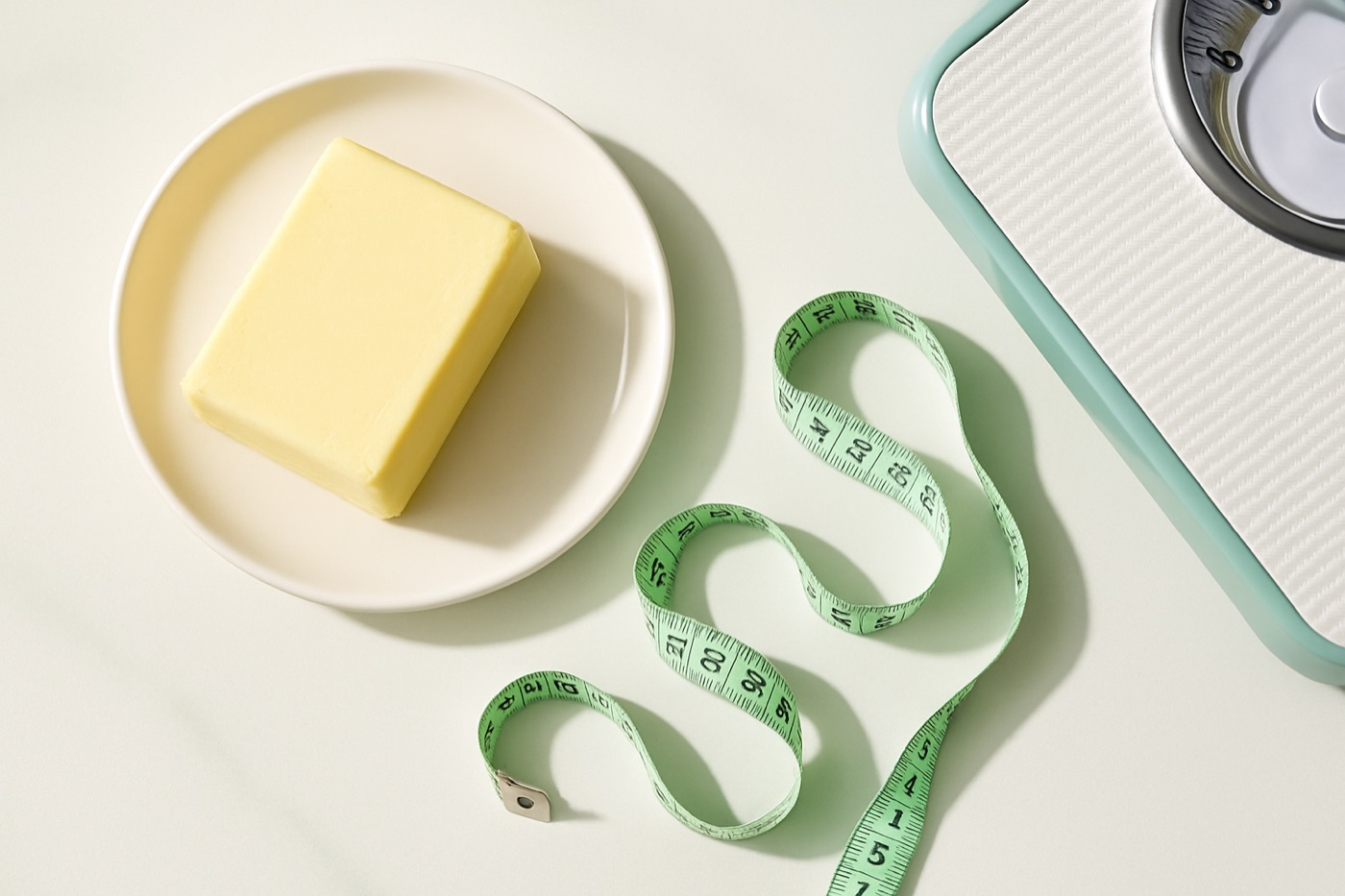
“A pound of fat is 3,500 calories” is one of the most repeated numbers in weight loss. It is roughly right about fat, and often wrong about what happens to you.
Where the number comes from
Pure fat contains about 9 calories per gram, so a pound (454 g) of pure fat holds about 4,100 calories. Body fat tissue is not pure fat: it is roughly 87 percent lipid, with water and supporting tissue making up the rest. That brings the energy in a pound of body fat to about 3,500 calories. The figure was popularised by a physician, Max Wishnofsky, in 1958, and it has been in diet books ever since.
In metric terms, a kilogram of body fat tissue holds about 7,700 calories.
The rule, and its problem
The classic rule says: eat 500 calories a day below maintenance, and you lose a pound a week (500 × 7 = 3,500). The arithmetic is fine. The assumption behind it is not: it treats your maintenance calories as fixed.
They are not. As you lose weight:
- A smaller body needs less energy, both at rest and when moving.
- Everyday movement often falls a little when you are eating less, usually without your noticing.
- The body adapts slightly, burning somewhat less than its new size alone would predict.
So a fixed 500-calorie cut at the start becomes a smaller deficit every month. Loss slows, and the 3,500 rule ends up overestimating long-term results, sometimes by a lot.
What the research models say
Mathematical models of human metabolism, notably the work of Kevin Hall and colleagues at the US National Institutes of Health published in The Lancet in 2011, describe weight change more accurately. Their widely quoted rule of thumb for adults with overweight: each 10-calorie-a-day permanent change in intake eventually changes body weight by about 1 pound, with about half of the change reached in a year and most of it in about three years.
Compare the two rules for a permanent cut of 250 calories a day:
| Rule | Predicted loss after 1 year | Predicted loss eventually |
|---|---|---|
| 3,500-calorie rule | about 26 lb (12 kg) | keeps going indefinitely |
| Dynamic model rule of thumb | about 12–13 lb (about 6 kg) | about 25 lb (11 kg), then stable |
The dynamic model is more realistic, and it explains why people plateau on a fixed intake.
Water makes the start look faster
The first week or two of a diet usually shows a bigger drop than the arithmetic predicts. Much of it is water: when carbohydrate intake falls, the body uses stored glycogen, and each gram of glycogen is stored with about three grams of water. That early drop is real weight, but not fat, and it does not continue at the same rate.
What to do with this
- Use 500 calories a day as a starting estimate, not a promise.
- Expect the first weeks to be faster and later months slower.
- Update your target as your weight falls. Most calorie counters recalculate when you enter a new weight; some adjust automatically from your logged intake and weight trend.
- Judge progress by monthly trends, not weekly ones, once you are past the first month.
- Plan for maintenance. At the end of a diet you will need fewer calories than you did at the start; see counting for maintenance.
The bottom line
A pound of body fat holds about 3,500 calories, and a 500-calorie daily deficit is a sensible place to start. But your needs shrink as you do, so expect loss to slow and adjust your target along the way.
Related
See how to count calories for setting a target and the counting mistakes to check before cutting further.
More on counting
- How many calories do I need to cut to lose a pound a week?
- About 500 calories a day is the traditional answer, and it is a reasonable starting point. In practice loss is usually a little slower than the rule predicts, and it slows further over time unless the target is adjusted.
- How many calories are in a kilogram of fat?
- A kilogram of body fat tissue stores roughly 7,700 calories. Pure fat has about 9,000 calories per kilogram, but body fat tissue also contains water and other material.
- Why am I losing weight more slowly than the 3,500 rule predicts?
- Because your energy needs fall as you get lighter and your body adapts slightly, so a fixed intake creates a shrinking deficit. Early losses also include water, which makes the first weeks look faster than later ones.