How to Count Calories – The Complete Method
Counting calories comes down to five steps. Set a realistic target, choose one way to log, log everything as you eat it, review weekly averages instead of daily totals, and adjust slowly using your weight trend.
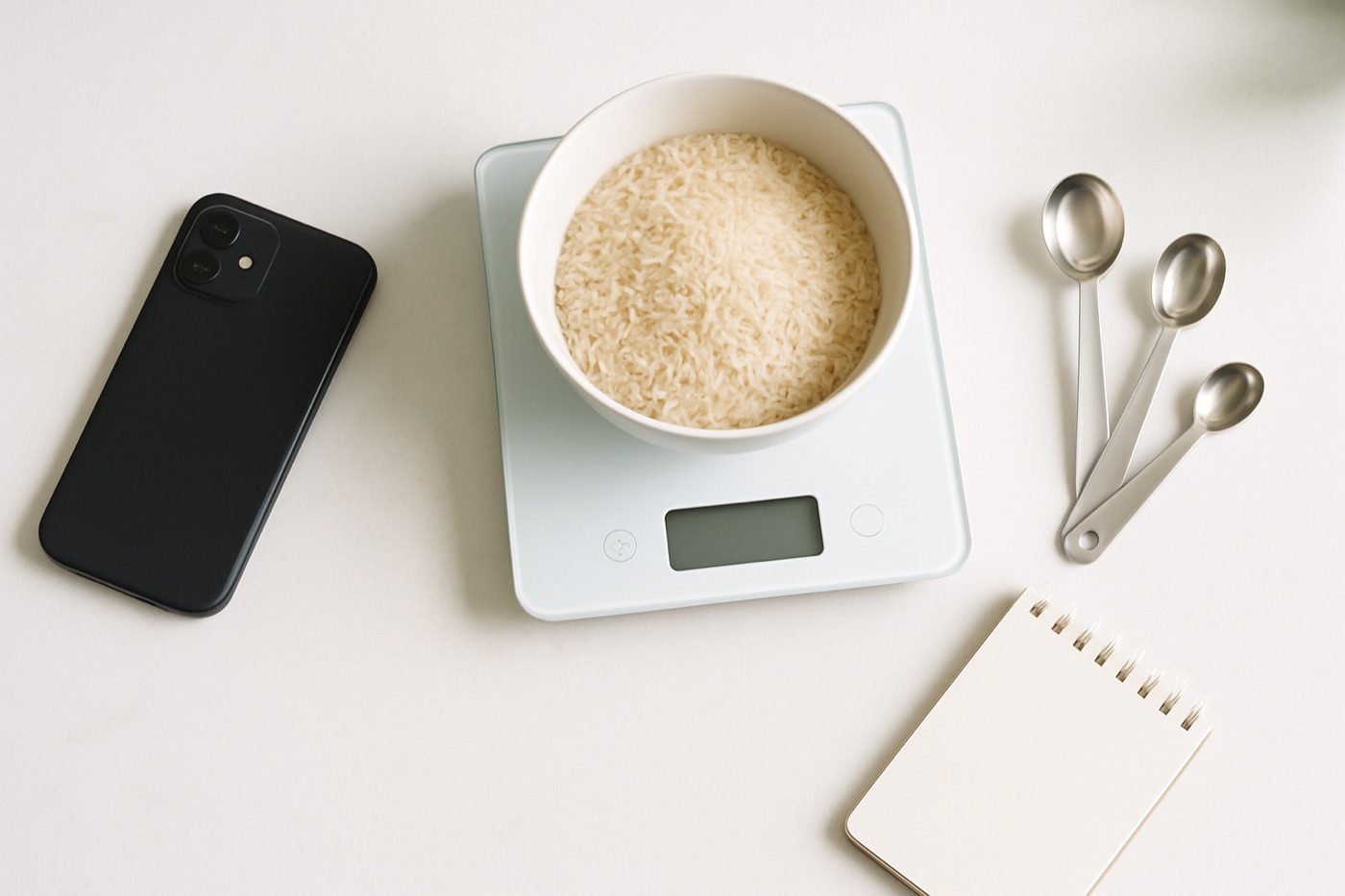
Counting calories is a skill, not a diet. The app does the arithmetic; you supply the inputs. Done well, it tells you what you actually eat and lets you change it on purpose. Done badly, it produces a number that is mostly guesswork. This is the method, step by step.
Step 1: Set a target you can live with
Your target starts from your maintenance calories: the amount that keeps your weight stable. Calorie counters estimate it from your sex, age, height, weight and activity, using equations such as Mifflin-St Jeor. From there:
- To lose weight, subtract 300 to 500 calories a day. That usually produces steady loss without making daily life miserable.
- To maintain, eat at the estimate and adjust from your weight trend; see counting for maintenance.
- To gain, add 250 to 500 calories, ideally with strength training.
Be honest about activity. Most people pick a level higher than their real one, which inflates the target. When in doubt, choose the lower level and let the scale tell you if it is too low.
Step 2: Choose your tools
You need three things:
- A calorie counter. Any of the apps in our 2027 report will do the arithmetic. Pick one whose way of logging suits how you eat.
- A way to measure, at least at first. A kitchen scale is the most accurate; measuring cups and spoons are close behind; your hand is the portable backup.
- A bathroom scale. Not to judge each day, but to give you the trend that tells you whether your counting matches reality.
Step 3: Log everything, as you eat it
This is the step that makes or breaks the count.
- Log before or straight after eating. Logging at night from memory loses snacks, drinks and portions.
- Use the fastest method for each food. Barcode for packaged food, a photo or a saved meal for plates, search for single foods, quick add for a restaurant meal with posted calories.
- Log the extras. Cooking oil, butter, sauces, dressings, milk in coffee, bites while cooking. These are the most common gaps; see counting mistakes.
- Log the hard days. A rough entry for a big dinner is far better than a blank.
Step 4: Measure the foods that matter
Measuring everything forever is unnecessary. Measuring the right things for a few weeks is very useful.
| Measure carefully | Estimate | Barely matters |
|---|---|---|
| Oils, butter, nut butters, nuts | Meat and fish portions | Leafy greens |
| Cheese, granola, cereal | Bread, fruit | Most non-starchy vegetables |
| Rice, pasta (and whether raw or cooked) | Restaurant meals | Herbs, spices, mustard |
The left column is where a “spoonful” can be twice what you think. Weigh these a few times until your eye is calibrated.
Step 5: Count recipes once
For dishes you cook often, enter the raw ingredients once, weigh the finished pot, and save it as a recipe. From then on, log your portion by weight. It is the single most accurate habit in home cooking; it also takes the effort out of every future meal of that dish. The grains chart explains why raw and cooked weights must not be mixed.
Step 6: Review weekly, not daily
Daily totals jump around. Look at your weekly average intake and your weekly average weight. Ask two questions:
- Is my average intake close to my target?
- Is my weight trend moving the way I expected?
If both answers are yes, carry on. If your intake is on target but weight is not moving as expected after three or four weeks, either your target or your counting needs adjusting.
Step 7: Adjust slowly
Change your target by 100 to 200 calories at a time and give each change three or four weeks. Before cutting further, check the counting: are oils, drinks and weekends really in the log? A two-week audit of the dense foods often finds the difference without changing the target at all.
A sample day, counted
| Meal | What was eaten | How it was logged | Calories (approx.) |
|---|---|---|---|
| Breakfast | Oats (40 g dry) with milk and a banana | Saved meal | 380 |
| Coffee | 12 oz latte, 2% milk | Search | 150 |
| Lunch | Chicken and salad wrap from a chain | Chain menu entry | 520 |
| Snack | Apple and 1 oz almonds | Search | 260 |
| Dinner | Home chili, 400 g bowl, with cheese | Saved recipe by weight | 450 |
| Evening | 2 squares dark chocolate | Barcode | 110 |
| Total | about 1,870 |
Six entries, perhaps five minutes in total across the day. That is what counting looks like once the habit is built.
Who should not count
Calorie counting is not suitable for everyone. People with a history of eating disorders, those who find tracking causes anxiety, people who are pregnant and anyone with a medical condition affecting their diet should get advice from a doctor or registered dietitian first.
Related
For quick values, see the calorie charts. For the apps that make this faster, see the 2027 report and the app report cards.
More on counting
- What is the easiest way to count calories?
- Use a calorie counter app and log each meal as you eat it, using the fastest method for each food (barcode for packages, a photo or saved meal for plates, search for the rest). Save meals you repeat so they take one tap.
- How accurate does calorie counting need to be?
- Consistency matters more than precision. A log that is within 10 to 20 percent but complete every day is far more useful than a precise log with gaps. Your weight trend over several weeks shows whether your counting is close enough.
- How long should I count calories?
- Many people count for a few months to reach a goal, then switch to occasional counting, such as one week a month, to check that portions have not drifted. Some count indefinitely because they like the information. Both are fine.