How to Count Macros – Protein, Carbs and Fat Explained
Counting macros means tracking grams of protein, carbohydrate and fat, not just calories. Start with a protein target, set a minimum for fat, and give the remaining calories to carbohydrate. Protein has 4 calories per gram, carbs 4 and fat 9.
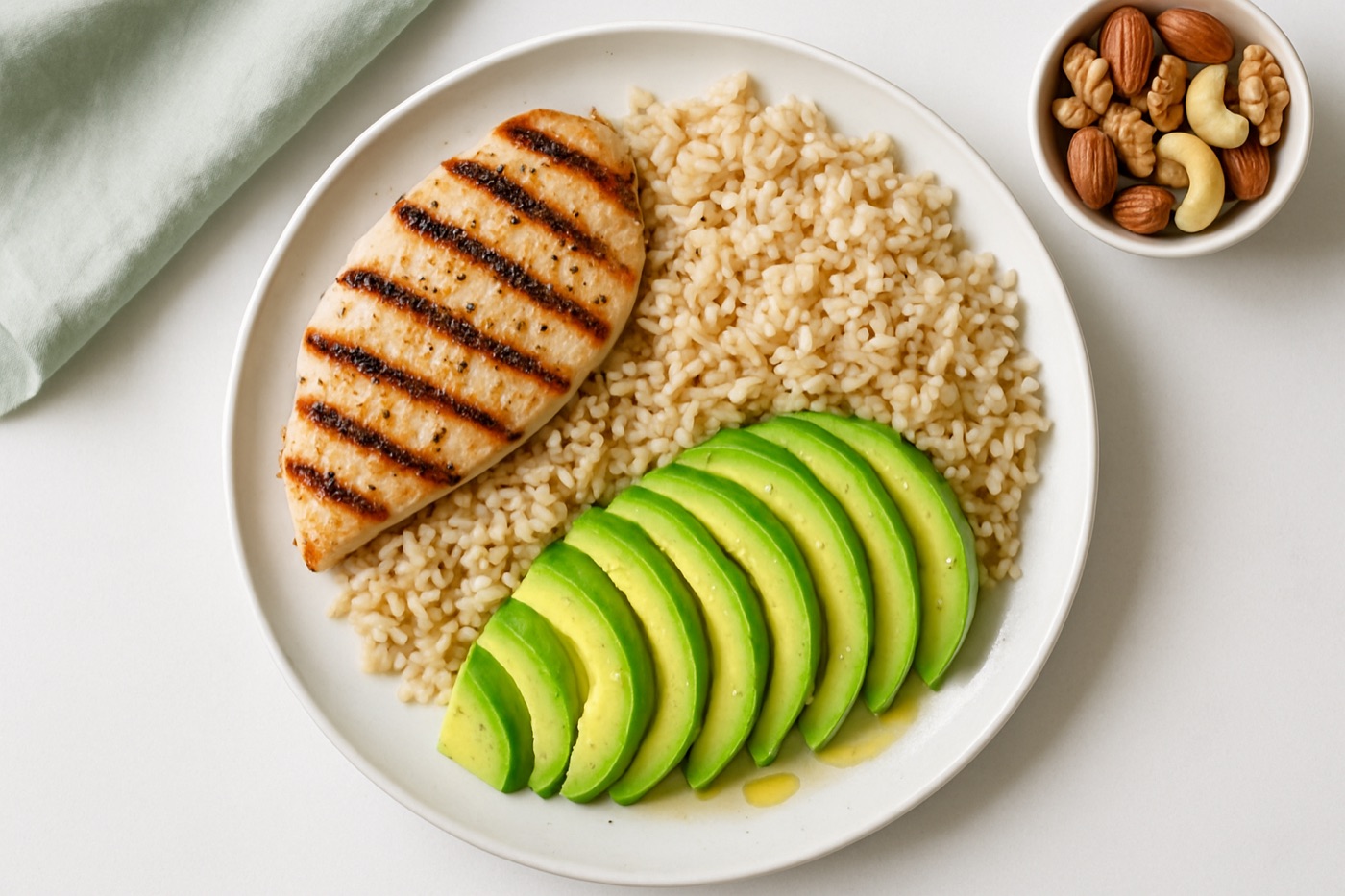
Every calorie in food comes from protein, carbohydrate, fat or alcohol. Counting macros means tracking those nutrients in grams, rather than only the calorie total. It sounds complicated, and it does not need to be.
The arithmetic
| Macro | Calories per gram |
|---|---|
| Protein | 4 |
| Carbohydrate | 4 |
| Fat | 9 |
| Alcohol (not a macro, but counted) | 7 |
A food with 20 g of protein, 30 g of carbohydrate and 10 g of fat has 20 × 4 + 30 × 4 + 10 × 9 = 80 + 120 + 90 = 290 calories. Labels round each number, so the total on the label may differ by a few calories.
Setting targets in three steps
1. Calories first. Start with your calorie target; see how to count calories.
2. Protein next. Protein helps preserve muscle in a deficit and keeps meals filling. Common targets:
| Situation | Protein per kg body weight |
|---|---|
| General health (RDA minimum) | 0.8 g |
| Losing weight | 1.2–1.6 g |
| Losing weight and strength training | 1.6–2.2 g |
If you have a lot of weight to lose, base the target on a goal or healthy-range weight.
3. Fat, then carbohydrate. Set fat at roughly 25 to 35 percent of calories, which keeps meals satisfying and supports essential fatty acid intake. Give the remaining calories to carbohydrate.
A worked example
A 70 kg person with a target of 1,800 calories, losing weight and lifting twice a week:
| Step | Calculation | Result |
|---|---|---|
| Protein | 70 kg × 1.6 g | 112 g = 448 calories |
| Fat | 30% of 1,800 = 540 calories ÷ 9 | 60 g |
| Carbohydrate | 1,800 − 448 − 540 = 812 calories ÷ 4 | about 203 g |
So the daily targets are roughly 112 g protein, 60 g fat and 200 g carbohydrate. In percentages that is about 25/30/45. Most calorie counters let you enter targets in grams or percentages.
Common splits and what they are for
| Approach | Protein / Carbs / Fat (% of calories) | Typical use |
|---|---|---|
| Balanced | 20–25 / 45–55 / 25–30 | General health, most people |
| Higher protein | 30–35 / 35–40 / 25–30 | Weight loss with strength training |
| Lower carb | 25–30 / 20–30 / 40–50 | Preference, blood sugar management with a clinician |
| Ketogenic | 20–25 / 5–10 / 65–75 | Very low carbohydrate diets |
The Acceptable Macronutrient Distribution Ranges used in US dietary guidance for adults are 10–35 percent of calories from protein, 45–65 percent from carbohydrate and 20–35 percent from fat. Lower-carb and keto plans sit outside those ranges and are best discussed with a clinician if you have a medical condition.
Hitting the numbers without obsessing
- Build meals around a protein source. Eggs or yogurt at breakfast, chicken, fish, tofu or beans at lunch and dinner.
- Measure the fats. Oils, butter, nuts and cheese move the fat number fastest.
- Treat targets as ranges. Within 10 grams of protein and 10 to 20 grams of carbs or fat is close enough.
- Look at the week. As with calories, weekly averages matter more than any one day.
Foods by their main macro
| Mostly protein | Mostly carbohydrate | Mostly fat | Mixed |
|---|---|---|---|
| Chicken breast, white fish, shrimp, egg whites, non-fat Greek yogurt, cottage cheese | Rice, pasta, bread, oats, potatoes, fruit | Oils, butter, nuts, seeds, avocado | Whole eggs, salmon, beans and lentils, cheese, milk |
The calorie charts list protein, carbs or fat for each food so you can see where the macros come from.
Related
If you count carbohydrates, read net carbs vs total carbs. For the apps that show macros best, see the app report cards.
More on counting
- What are macros?
- Macros, short for macronutrients, are the three nutrients that supply calories in food. Protein and carbohydrate provide about 4 calories per gram, fat about 9 calories per gram. Alcohol provides about 7 but is not usually counted as a macro.
- What is a good macro split for weight loss?
- There is no single best split. A practical approach is to set protein at about 1.2 to 1.6 g per kg of body weight, fat at around 25 to 35 percent of calories, and the rest as carbohydrate. The calorie total drives weight loss; protein helps preserve muscle and fullness.
- Is counting macros better than counting calories?
- Counting macros includes counting calories, with more detail. It is useful if you want to protect muscle, train hard or follow a low-carb or high-protein plan. If calories alone are working, adding a protein target is often enough.