Calories in Dairy and Eggs – Milk, Yogurt, Cheese and Eggs
A large egg has about 72 calories. A cup of milk ranges from about 83 calories (skim) to 149 (whole), and plain Greek yogurt is one of the highest-protein foods per calorie. Cheese, butter and cream are dense and worth measuring.
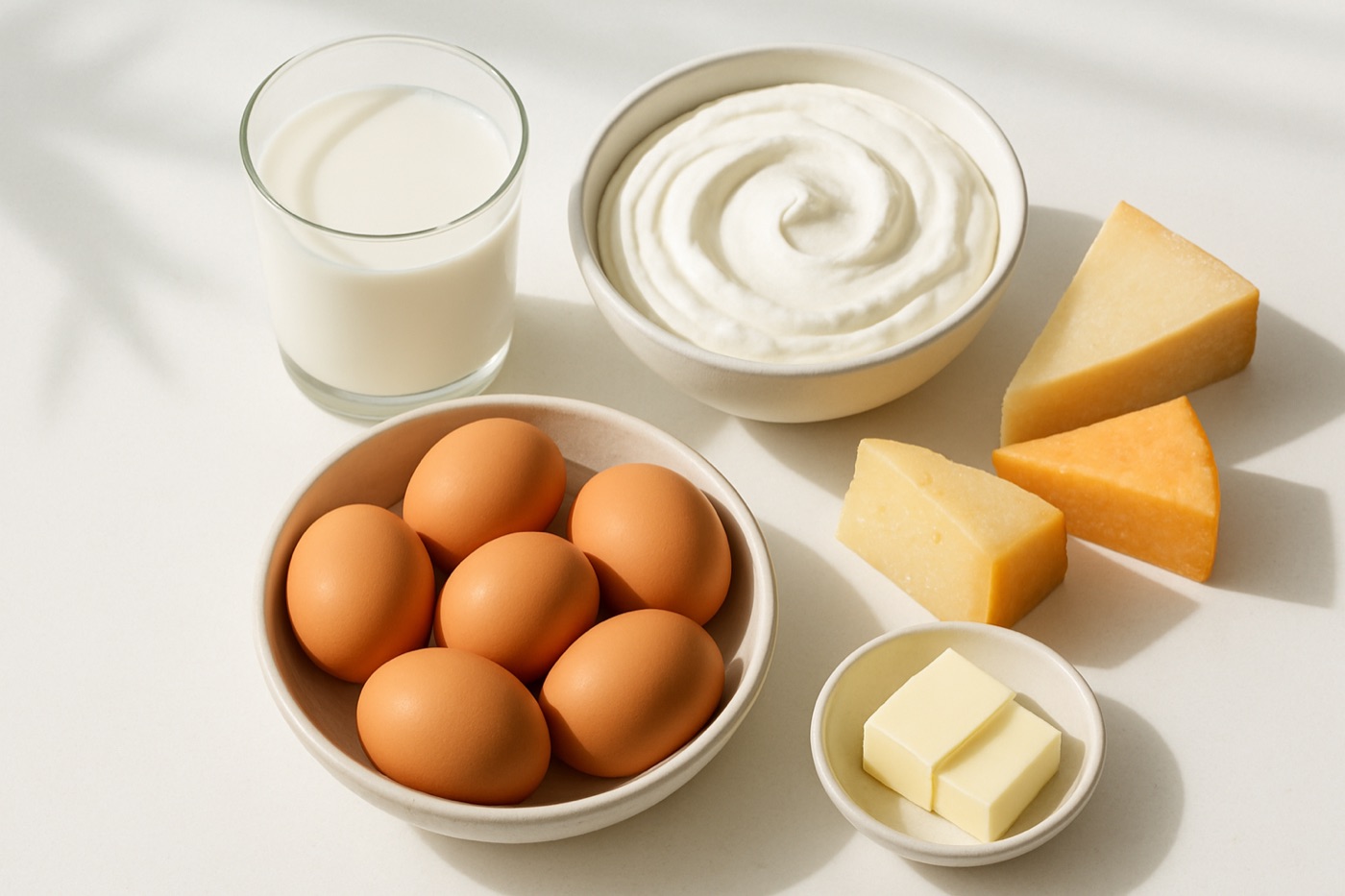
Dairy is a food group where the label on the front tells you most of what you need: whole, 2%, skim; full-fat, low-fat, non-fat. The fat level drives the calories, while protein stays similar. Eggs are simpler still: count them one by one.
Eggs
| Item | Serving | Calories | Protein | Fat |
|---|---|---|---|---|
| Egg, whole | 1 large (50 g) | 72 | 6.3 g | 4.8 g |
| Egg white | 1 large (33 g) | 17 | 3.6 g | 0.1 g |
| Egg, fried in butter | 1 large | about 90–100 | 6 g | 7 g |
| Scrambled, with milk and butter | 2 eggs | about 180–200 | 12 g | 14 g |
Milk
| Milk | Serving | Calories | Protein | Fat |
|---|---|---|---|---|
| Whole (3.25%) | 1 cup (244 g) | 149 | 7.7 g | 7.9 g |
| Reduced-fat (2%) | 1 cup | 122 | 8.1 g | 4.8 g |
| Skim | 1 cup | 83 | 8.3 g | 0.2 g |
For plant milks, see the drinks chart.
Yogurt
| Yogurt | Serving | Calories | Protein | Fat |
|---|---|---|---|---|
| Greek, plain, non-fat | 170 g (6 oz) | 100 | 17 g | 0.7 g |
| Greek, plain, whole milk | 170 g | about 165 | 16 g | 8.6 g |
| Plain, low-fat | 1 cup (245 g) | 154 | 13 g | 3.8 g |
| Flavoured, low-fat | 170 g | 140–180 | 6–8 g | 2–3 g |
Cheese and dairy fats
| Item | Serving | Calories | Protein | Fat |
|---|---|---|---|---|
| Cheddar | 1 oz (28 g) | 114 | 7 g | 9.4 g |
| Mozzarella, part-skim | 1 oz (28 g) | 72 | 7 g | 4.5 g |
| Feta | 1 oz (28 g) | 75 | 4 g | 6 g |
| Parmesan, grated | 1 tablespoon (5 g) | 21 | 1.9 g | 1.4 g |
| Cottage cheese, 2% | ½ cup (113 g) | 92 | 12 g | 2.6 g |
| Cream cheese | 1 tablespoon (14.5 g) | 51 | 0.9 g | 5 g |
| Butter | 1 tablespoon (14 g) | 102 | 0.1 g | 11.5 g |
| Heavy cream | 1 tablespoon (15 g) | 51 | 0.4 g | 5.4 g |
Values are approximate, rounded from USDA FoodData Central. Brands differ, especially for yogurt and cheese; the label is the best guide.
Where dairy calories hide
- Cheese by the handful. Grated cheese on pasta, a salad or a taco is easy to over-pour. A loose handful is often 40 to 60 g, 160 to 240 calories of cheddar.
- Butter on bread and vegetables. One tablespoon is about 100 calories; a generous spread is often more.
- Cream and milk in coffee. Two cups a day with a good splash of whole milk or cream can add 100 to 150 calories that rarely get logged.
- Flavoured yogurts. Some carry 15 g of added sugar or more per pot.
Protein per calorie
For people counting calories while keeping protein up, non-fat Greek yogurt (about 17 g protein per 100 calories), cottage cheese (about 13 g per 100 calories), egg whites and skim milk are among the most efficient foods in the supermarket. Whole eggs and cheese are excellent foods too, with more of their calories from fat.
Related
See the meat and poultry chart and the fish chart for other protein foods, and the explainer on counting macros.
Other calorie charts
- How many calories are in an egg?
- A large egg (about 50 g without the shell) has about 72 calories, 6 g of protein and 5 g of fat. Most of the calories and all of the fat are in the yolk; a large egg white alone has about 17 calories.
- How many calories are in a slice of cheese?
- A 1 oz (28 g) slice of cheddar has about 114 calories. Thin pre-sliced cheese is often 20 g a slice, about 80 calories. Part-skim mozzarella is lower, at about 72 calories per ounce.
- Is Greek yogurt better than regular yogurt for weight loss?
- Plain non-fat Greek yogurt has about twice the protein of regular yogurt for similar calories, which makes it more filling. Flavoured yogurts of either kind can carry a lot of added sugar, so check the label.